
Why Can Technical Training Be a Technician Retention Strategy?
October 2, 2026
Training Costs vs. Costs of Poor Competency: Which Is More Expensive for the Company?
October 5, 2026
The demand for competent industrial technicians continues to grow across many industries.
Companies need technicians who can work safely, independently, and consistently.
Technology is also making technical roles increasingly complex.
Technicians now work with automation, control systems, electrical systems, and advanced equipment.
These changes require companies to rethink how they develop technical talent.
Two common options are apprenticeship programs and short courses.
So, which approach is more effective for developing industrial technicians?
What Is the Difference Between Apprenticeship and Short Courses?
A short course usually focuses on a specific technical skill.
It can address an immediate training requirement within a limited timeframe.
Participants may study topics such as electrical safety, troubleshooting, maintenance, or equipment operation.
An apprenticeship follows a longer and more structured development pathway.
It combines classroom learning, workshop practice, and workplace experience.
This approach allows participants to develop competency progressively.
They can also apply their learning in real working environments.
Current workforce training trends increasingly emphasize practical application.
Companies want evidence that employees can perform after completing their training.
When Is a Short Course the Better Choice?
Short courses remain valuable for targeted skills development.
They work well when a company needs a specific competency quickly.
For example, a company may need better troubleshooting skills for particular equipment.
Short courses can also help technicians adapt to new technologies.
Modular training allows companies to address specific skill gaps efficiently.
They are especially useful for targeted upskilling programs.
Training content can focus directly on an identified operational need.
However, short courses have limitations when the goal is broader occupational competency.
Limited training time can reduce opportunities for practice, assessment, and feedback.
Companies should therefore define the desired outcome before selecting a training format.
Why Is Apprenticeship Stronger for Competency Development?
Apprenticeship Program vs Short Course is not simply a comparison of training duration.
The main difference is the depth of learning and workplace application.
An apprenticeship gives participants more time to develop technical capability.
They can learn concepts, practice techniques, perform tasks, and receive feedback.
This process helps develop technical judgment and problem-solving skills.
These capabilities are essential in complex industrial environments.
Apprenticeships also connect learning with everyday workplace requirements.
Participants can apply their skills while performing relevant work activities.
The Business Impact of Technical Training
For companies, training should deliver more than certificates.
The ultimate objective is stronger workforce capability.
Companies need technicians who can perform tasks consistently and safely.
Structured development can also help companies build talent internally.
This approach may reduce dependence on external recruitment.
Companies can also establish more consistent technical standards across their workforce.
This supports safety, quality, productivity, and operational reliability.
Recent industry discussions highlight the growing importance of internal upskilling.
Organizations increasingly use workforce development to address talent shortages and changing skill requirements.
Apprenticeship and Short Courses Can Work Together
These two approaches do not necessarily need to compete.
Companies can use short courses for specific technical requirements.
They can use apprenticeships to build broader technical competency.
Combining both approaches can create a stronger learning pathway.
For example, technicians can complete an apprenticeship to develop core competency.
They can then attend short courses for specific technologies or equipment.
This approach makes technical development more flexible and relevant.
How TSDC Develops Industrial Technicians
TSDC (Technical Skill Development Centre) uses an apprenticeship approach for electrical technician development.
The TSDC program runs for three years with structured competency development.
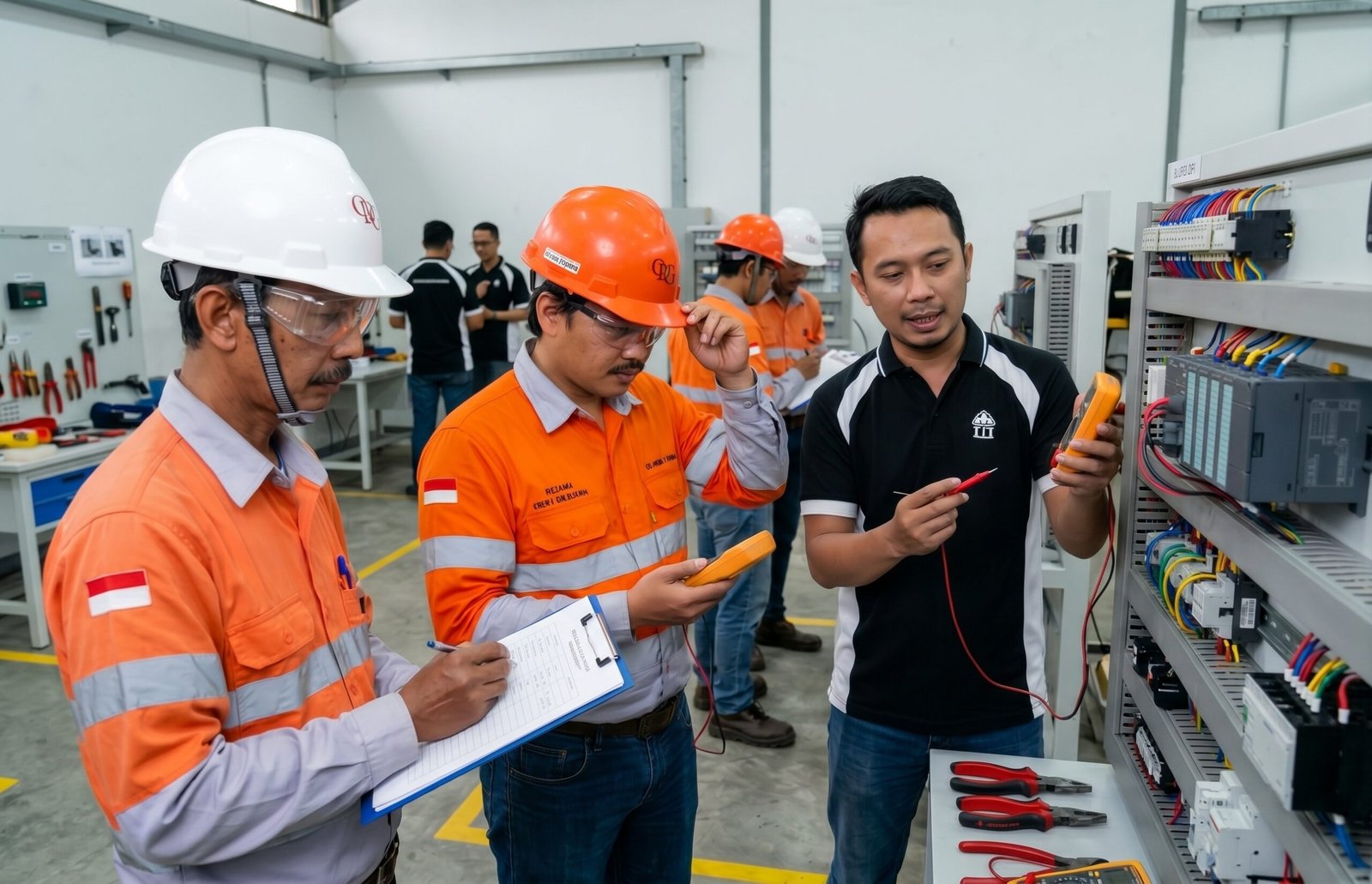
Each skill set combines classroom learning, workshop practice, and workplace application.
The program includes approximately one month of classroom and workshop training.
Participants then apply their skills in the workplace for approximately five months.
The program uses an industry-based curriculum developed with Holmesglen Victoria TAFE.
The curriculum is also adapted to Indonesian workforce requirements.
Participants practice using hand tools and power tools during workshop sessions.
They also learn installation techniques based on industry best practices.
TSDC monitors workplace application through regular activity reports.
Company supervisors verify the relevant activities completed by participants.
This approach connects training directly with real operational requirements.
Which Training Approach Is More Effective?
The answer depends on the company’s objective.
Short courses are effective for specific and immediate skill requirements.
Apprenticeships are stronger for developing broader technical competency.
For companies building long-term technical capability, apprenticeship offers a comprehensive pathway.
For targeted upskilling, a short course may provide a faster solution.
Companies should therefore look beyond training duration and cost.
They should also evaluate what participants can actually perform after training.
Build Your Technical Workforce with TSDC
Technical competency directly influences workplace safety, productivity, and operational reliability.
The right training approach helps companies build a workforce prepared for industrial demands.
TSDC provides practical learning through an industry-based training approach.
Through TSDC (Technical Skill Development Centre), companies can develop technicians through a structured pathway.
The program connects classroom learning, workshop practice, and workplace application.
For companies seeking to develop competent and future-ready technical talent, TSDC can support your workforce development strategy.
Whatsapp : +62 811 1302 0888
Email : marketing@ptodg.com