

Recurring Downtime? Re-evaluate Your Maintenance Team’s Competence.
October 12, 2026
Industrial companies need electrical technicians who understand technical principles and can solve practical problems. Classroom learning alone may not fully prepare technicians for real workplace challenges.
Companies need training methods that combine theory, practical exercises, and workplace experience. An apprenticeship program offers one approach to developing technical skills through structured learning and supervised practice.
What Is an Electrical Technician Apprenticeship?
An electrical technician apprenticeship combines structured training with practical experience in a workplace environment. Participants learn electrical fundamentals before applying their knowledge to relevant technical tasks.
The program helps participants connect electrical theory with industrial operating requirements. They also develop problem-solving skills through practical exercises, mentoring, and workplace assignments.
For employers, an apprenticeship can support workforce development and prepare technicians for specific operational requirements. It can also help address skill gaps between existing capabilities and industry standards.
How Does the Learning Process Work?
A structured apprenticeship typically includes several learning stages. The duration and sequence depend on the curriculum, company requirements, and each participant’s competency level.
1. Electrical Theory and Fundamentals
Participants begin by learning essential electrical principles. Topics may include electrical safety, electrical circuits, electrical components, and basic system operations.
This stage builds the foundation for more complex technical activities. Participants also learn workplace safety procedures and the correct use of tools under trainer supervision.
2. Hands-on Practice in a Workshop
After learning the theory, participants complete hands-on practice using training equipment. Exercises may include reading electrical diagrams, taking measurements, and identifying electrical components.
Trainers provide guidance and feedback throughout the learning process. Participants can correct mistakes and develop a better understanding of proper working procedures.
3. Practical Experience in the Workplace
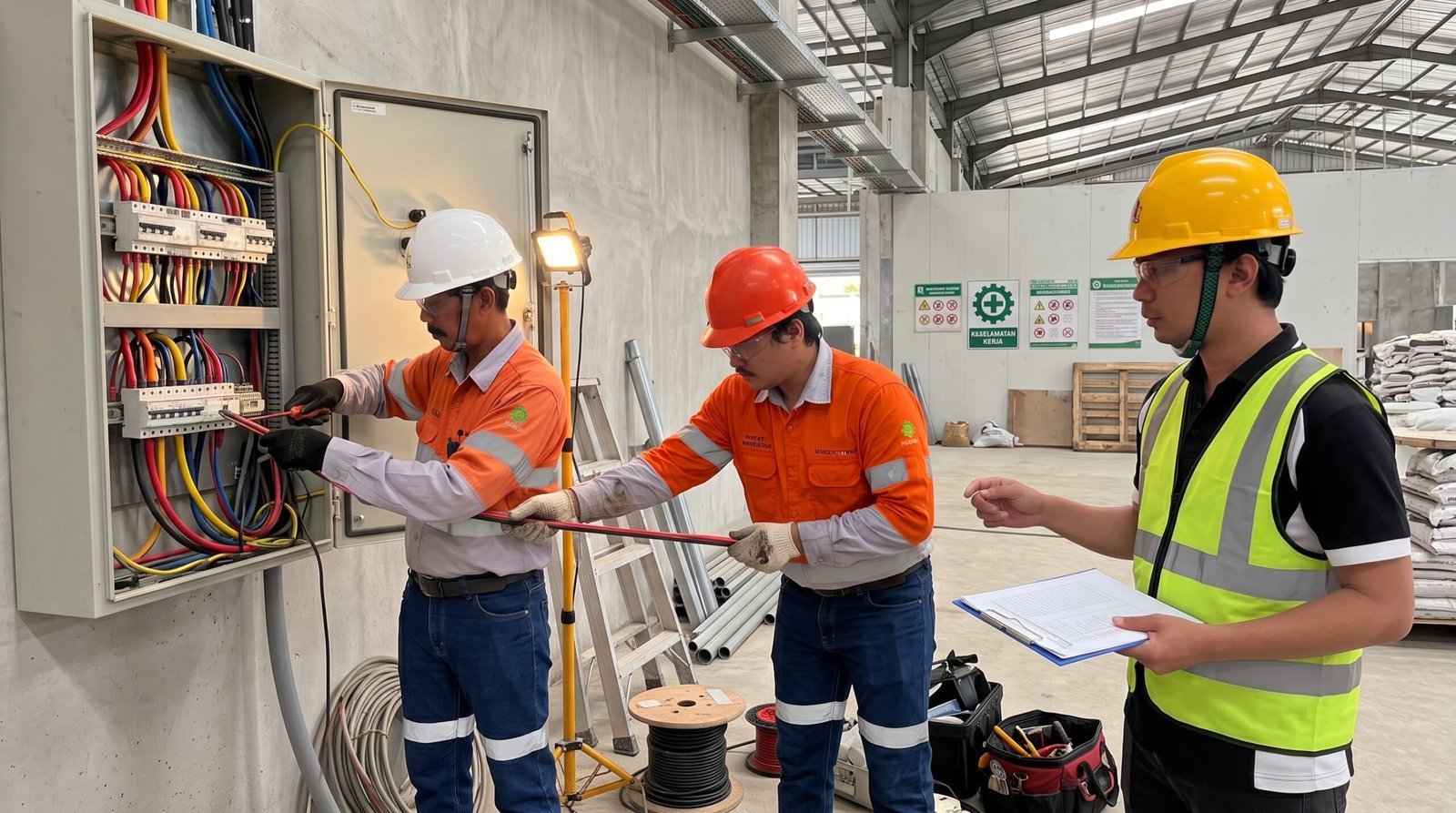
Participants apply their knowledge to suitable workplace tasks. Activities may include inspection, preventive maintenance, troubleshooting, and electrical component checks.
Supervisors or mentors provide guidance based on each participant’s readiness. Companies must maintain appropriate safety procedures and assign tasks according to competency and authorization.
4. Competency Assessment and Evaluation
A structured apprenticeship needs regular assessments to measure participant progress. Evaluations may cover theoretical knowledge, practical skills, workplace safety, and problem-solving abilities.
Assessment results help trainers identify areas that require further development. Employers can also use these results to create individual development plans for their technicians.
What Are the Benefits of Apprenticeship for Employers?
An apprenticeship can help companies develop a more capable maintenance workforce. Key benefits include:
- Improved practical skills: Technicians learn to apply theoretical knowledge to relevant workplace situations.
- Reduced skill gaps: Companies can align training with operational requirements.
- Better safety awareness: Participants learn the importance of procedures and hazard identification.
- Stronger problem-solving skills: Practical exercises help technicians analyze technical issues systematically.
- Career development opportunities: Structured learning provides a pathway for continuous competency development.
These benefits depend on curriculum quality, trainer expertise, mentoring, and consistent assessment. Companies should also evaluate workplace performance to measure training effectiveness.
Apprenticeship vs Short Course: What Is the Difference?
A short course usually focuses on a specific topic or skill within a limited period. This approach suits companies that need targeted competency development.
An apprenticeship generally follows a more progressive learning structure. Participants develop foundational knowledge, practical skills, and workplace experience throughout the program.
Companies should choose an approach based on their competency targets and operational requirements. Combining apprenticeships with short courses can also support continuous employee development.
Develop Electrical Technician Skills with TSDC
Developing competent electrical technicians requires more than workplace experience alone. Companies need structured training, hands-on practice, and assessments aligned with industrial requirements.
TSDC (Technical Skill Development Centre) supports technician development through a learning approach that connects theory with practical application. Companies can explore training programs suited to their electrical and maintenance teams.
Contact TSDC to discuss your company’s electrical technician training needs and identify the right approach to competency development.
Whatsapp : +62 811 1302 0888
Email : marketing@ptodg.com