The Future of the Mining Industry: Technology, Innovation, and Competence
October 1, 2026
Apprenticeship Program vs. Short Course: Which Is More Effective for Developing Industrial Technicians?
October 5, 2026
Retaining experienced technicians can be challenging for many companies.
Technicians hold valuable knowledge about equipment, systems, maintenance, and operational procedures.
This knowledge is often developed through years of practical experience.
When experienced technicians leave, companies lose more than a position.
They also lose valuable technical knowledge and workplace experience.
New technicians need time to understand equipment and operational conditions.
This transition can affect productivity and operational continuity.
Therefore, companies need to approach technician retention from a broader perspective.
One important approach is providing continuous opportunities for professional development.
Is Compensation Enough to Retain Technicians?
Compensation is an important factor in employee retention.
However, technicians also need opportunities to grow professionally.
They want to understand how their careers can develop within the company.
They also need to know which skills can help them take greater responsibility.
This is where technical training can become strategically important.
Training can connect business requirements with technician career aspirations.
Companies develop a stronger workforce.
Technicians gain opportunities to improve their skills and professional value.
This relationship can contribute to a more positive employee experience.
Technical Training Is More Than a Training Activity
Companies often view training as an activity for improving specific skills.
However, technical training can become part of a broader workforce development strategy.
Effective training can help companies answer three important questions.
First, what skills do technicians currently have?
Second, what skills are required for their current roles?
Third, what skills are needed for their next career level?
These questions help companies create clearer development pathways.
Technicians can also understand how training connects with their career progression.
This makes training more valuable than simply earning a certificate.
When Technicians Can See a Future Within the Company
Limited development opportunities can encourage employees to explore other opportunities.
The same situation can happen within technical teams.
Technicians who perform similar tasks for years may need new challenges.
They may want to work with more complex equipment.
They may also need new skills to take greater responsibility.
Companies can address these needs through structured technical training.
Training can be designed around skill matrices and operational requirements.
Programs can then be aligned with each technician’s competency level.
Junior technicians can follow different development pathways from senior technicians.
This approach makes career development more structured.
Turning Skill Gaps into Development Opportunities
Skill gaps are often treated as problems that need immediate solutions.
However, companies can also view skill gaps as development opportunities.
Technology changes continuously and creates new requirements for technical teams.
Industrial automation requires technicians to understand increasingly complex systems.
Electrical systems also continue to evolve with industry requirements.
Technicians therefore need continuous learning opportunities.
Technical training helps companies turn these requirements into development programs.
Technicians can strengthen competencies based on actual workplace needs.
Companies can also build stronger internal talent pools.
Why Is Practical Training Important for Technicians?
Technicians work with real equipment and systems every day.
Therefore, they need learning experiences that can be applied directly.
Training should not stop at theoretical concepts.
Participants need to understand how concepts work in real conditions.
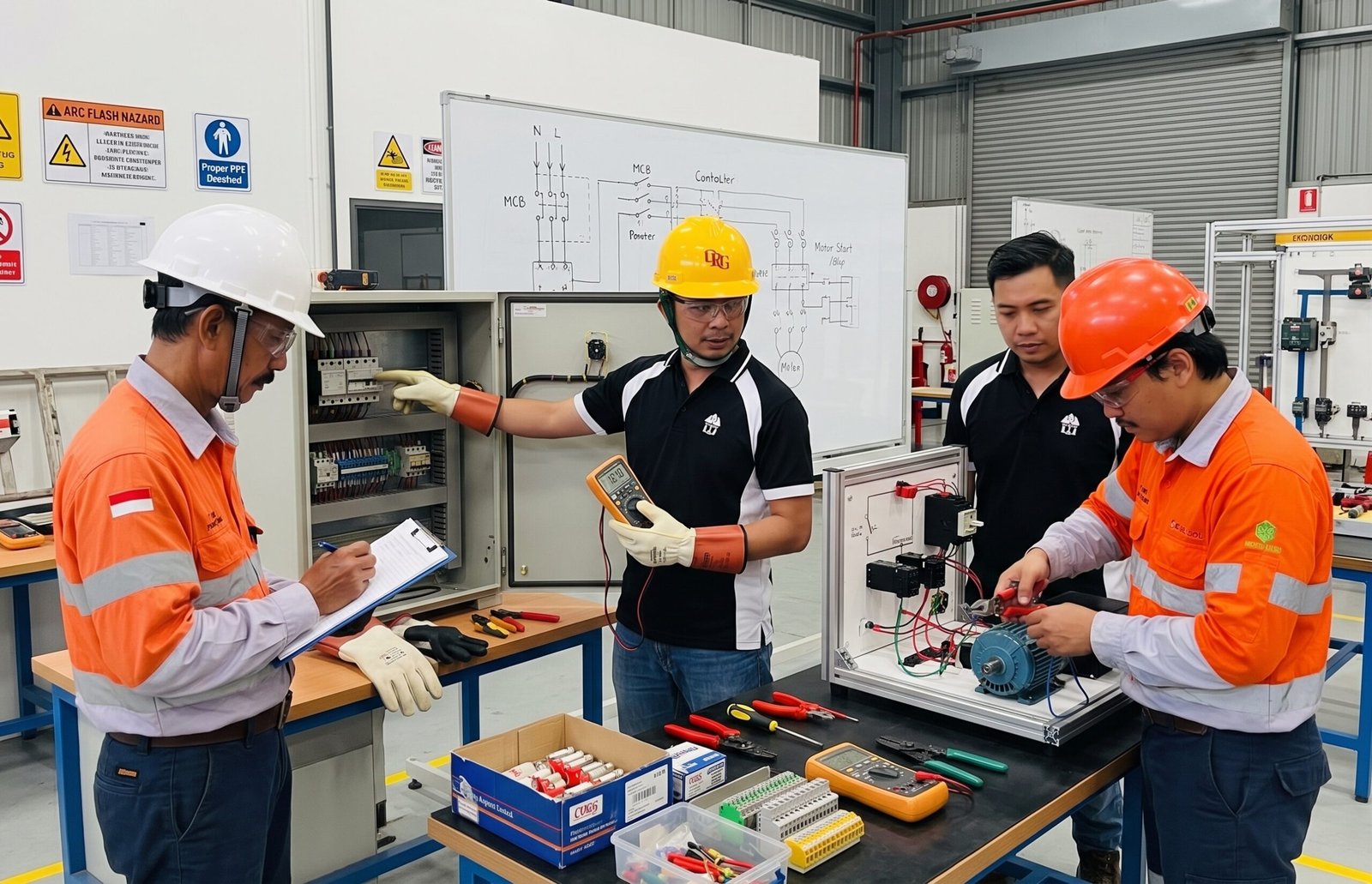
They also need opportunities to troubleshoot and solve technical problems.
Practical learning connects technical knowledge with workplace application.
TSDC combines classroom learning with practical workshop activities.
Participants can also connect their learning with workplace application.
This approach makes technical training more relevant to industry needs.
TSDC and Technical Workforce Development
TSDC, or Technical Skill Development Centre, focuses on technical workforce development.
Its programs help companies strengthen electrical technician capabilities.
TSDC combines structured learning with practical training.
This approach helps participants understand concepts and their practical applications.
TSDC also uses an Electrotechnology curriculum developed with Holmesglen Victoria TAFE.
The approach supports Australian-standard electrical training and practical skill development.
For companies, this approach can support a broader workforce development strategy.
Training can also be aligned with company skill requirements and operational environments.
Connecting Training with Career Pathways
Training can create greater value when companies connect it with career pathways.
For example, companies can define competencies for each technician level.
Each level can have different skill and training requirements.
Technicians can understand which capabilities they need to develop.
Supervisors can monitor development progress within their teams.
HR and L&D teams can use this information to design development programs.
Engineering teams can also ensure that training remains relevant to operational requirements.
Training therefore becomes part of a broader talent development system.
Technician Retention Starts with Development Opportunities
Retention is not only about keeping employees in the company.
It is also about creating reasons for them to continue developing within the organization.
Technical teams need an environment that supports continuous learning.
They need opportunities to improve skills and take on new responsibilities.
Companies can build this environment through structured technical training.
The right training program can help address existing skill gaps.
It can also strengthen career development and technical capability.
Companies can then build an internal workforce that is better prepared for technological changes.
For companies looking to strengthen their technical workforce, training can become a long-term investment.
TSDC (Technical Skill Development Centre) helps companies develop electrical technicians through structured training, practical workshops, and workplace application.
With the right development approach, companies do more than improve technician skills.
They also create stronger opportunities for technicians to grow within the organization.
Therefore, technical training for technician retention can become an important part of a company’s workforce development strategy.
Whatapp : +62 811 1302 0888
Email : marketing@ptodg.com