Cara Menghitung ROI Technical Training untuk Teknisi: Dari Biaya Training hingga Productivity Gain
August 29, 2026
Build vs. Buy Talent: Should Companies Develop Their Own Tech Talent or Recruit from the Market?
September 5, 2026
Many companies view skill gaps as an HR challenge. They focus on recruitment, retention, and workforce planning.
However, the problem does not stop at HR. When technicians lack the required competency, the impact reaches operational performance directly.
Equipment becomes harder to maintain. Troubleshooting takes longer. Downtime can also increase.
Companies should therefore look at skill gaps from a broader perspective. Technician competency issues can develop into operational risks.
What Is a Technical Skill Gap?
A technical skill gap is the difference between current technician capabilities and job requirements.
Several factors can create this gap. Equipment technology often develops faster than workforce capabilities.
Automation also creates more complex technical competency requirements. Technicians may need electrical, PLC, instrumentation, control system, and troubleshooting skills.
This situation makes one-time onboarding training insufficient. Companies need continuous technical development to maintain workforce competency.
Why Does the Skill Gap Become an Operational Problem?
Skill gaps become visible when equipment experiences failures.
Technicians with limited competency may need more time to identify the root cause. This can extend downtime and disrupt production schedules.
Some companies also depend heavily on specific senior technicians. These individuals become the only people capable of solving certain technical problems.
This creates a single point of failure within the workforce. When those technicians are unavailable, response time can increase.
OECD research also indicates that skill gaps can reduce productivity and increase operating costs.
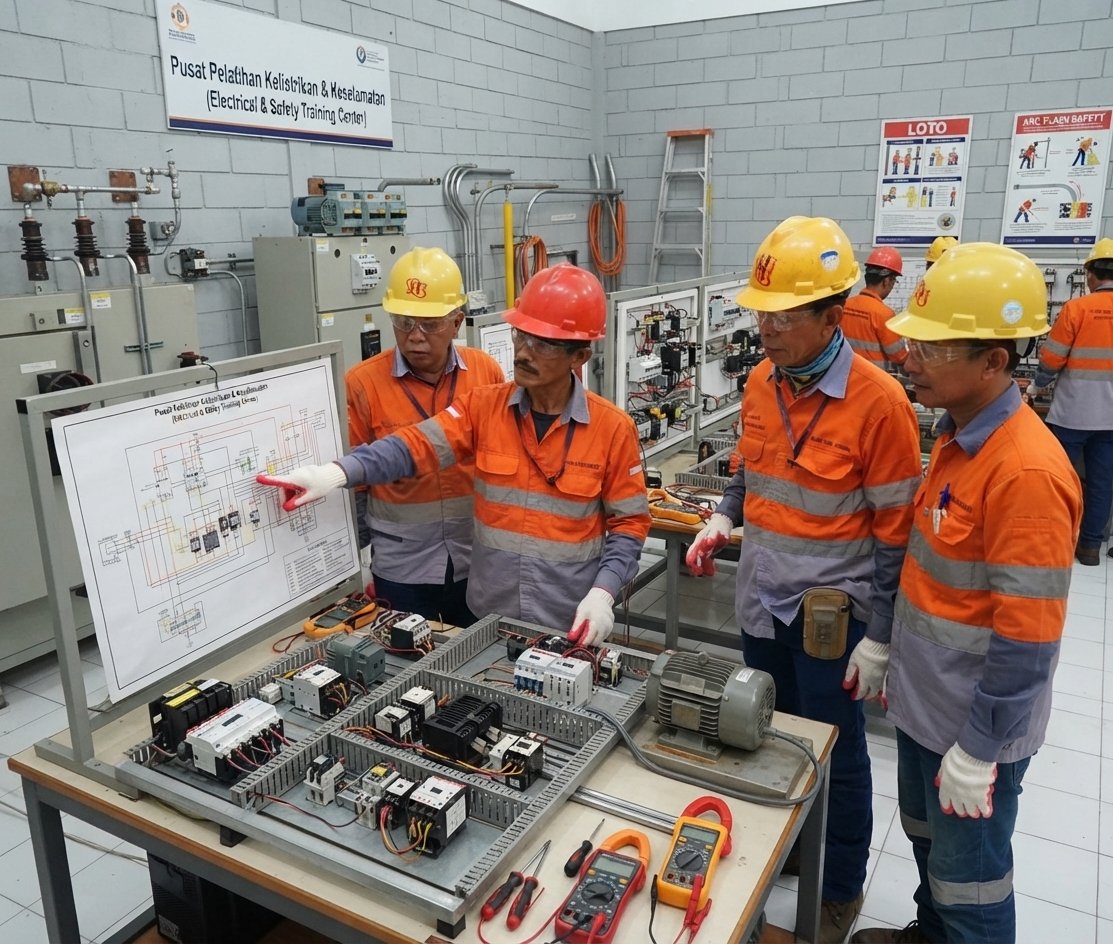
How Does a Technical Skill Gap Affect Business Performance?
1. Higher Downtime
Technicians may require more time to diagnose equipment problems.
Incorrect troubleshooting can also lead to repeated repair work.
On critical equipment, additional downtime can directly affect production output.
2. More Reactive Maintenance
Teams with competency gaps often focus on breakdown recovery.
They may have less capacity to perform preventive maintenance properly.
Preventive maintenance requires technicians who understand equipment, procedures, and failure mechanisms.
3. Higher Contractor Dependency
Companies may rely more heavily on external contractors for specialized work.
This can increase maintenance costs and reduce internal technical capability.
4. Loss of Technical Knowledge
Senior technicians often carry significant tacit knowledge from years of experience.
Without a structured knowledge transfer program, companies can lose this knowledge when experienced employees leave.
This issue becomes more important as industrial equipment becomes increasingly complex.
Is It an HR Problem or an Operations Problem?
The answer is both.
HR manages workforce development strategy. Operations ensures that employee competency matches actual field requirements.
Engineering and Maintenance also play important roles. They understand the technical competencies required for specific equipment.
Companies therefore need collaboration between HR, L&D, Engineering, and Operations.
This approach helps connect training programs with actual business requirements.
How Can Companies Identify Skill Gaps?
Companies can start with competency mapping.
Map each technician’s capabilities based on their role and equipment responsibilities.
Then compare those capabilities against the required competency levels.
Key areas may include:
- Electrical troubleshooting
- Motors and generators
- PLC and automation
- Instrumentation
- Mechanical maintenance
- Preventive maintenance
- Fault finding
- Safety procedures
- Equipment-specific competency
The assessment results can then determine training priorities.
Companies should prioritize competencies that have the greatest impact on operational continuity.
Training Should Be Connected to Operational Risk
Training should not simply follow a course catalogue.
Companies should connect training priorities with actual operational problems.
For example, frequent electrical faults may require stronger electrical troubleshooting skills.
Automation issues may require additional PLC and control system competency.
This approach makes technical training more relevant and easier to measure.
A structured maintenance training program can also help companies align technician competency with equipment requirements.
TSDC as a Technical Skill Development Partner
Companies need training partners that understand technicians and operational environments.
TSDC, or Technical Skill Development Centre, can support companies in developing structured technical competency programs.
Training programs can be aligned with company requirements, equipment, and technician competency levels.
The objective goes beyond completing a training course.
The goal is to develop technicians who are more capable, confident, and productive.
Turning an HR Challenge into a Business Priority
Companies should not wait until skill gaps create major operational disruptions.
Identify competency gaps early. Connect assessment results with training plans and operational priorities.
With this approach, HR does more than manage the training budget.
HR can contribute directly to workforce readiness and business continuity.
Ultimately, a technical skill gap is not only a recruitment or HR issue.
It can influence productivity, maintenance performance, downtime, and operational risk.
Companies that manage technical competency strategically can build a workforce that is better prepared for technological change.
Bridge the Technical Skill Gap with TSDC
Enhance technician competence and reduce operational risk through industry-aligned technical training.
Contact TSDC for your company’s technician training solutions.
Whatsapp : +62 811-8111-3032
Email : marketing@ptodg.com

