
Training Teknisi Bukan Cost Center: Bagaimana Technical Training Meningkatkan Produktivitas Operasional?
Agustus 21, 2026
Technical Skill Gap: Masalah HR atau Operational Risk bagi Perusahaan?
Agustus 31, 2026
Technical training is often considered an employee development expense. However, technician training can directly impact operational performance.
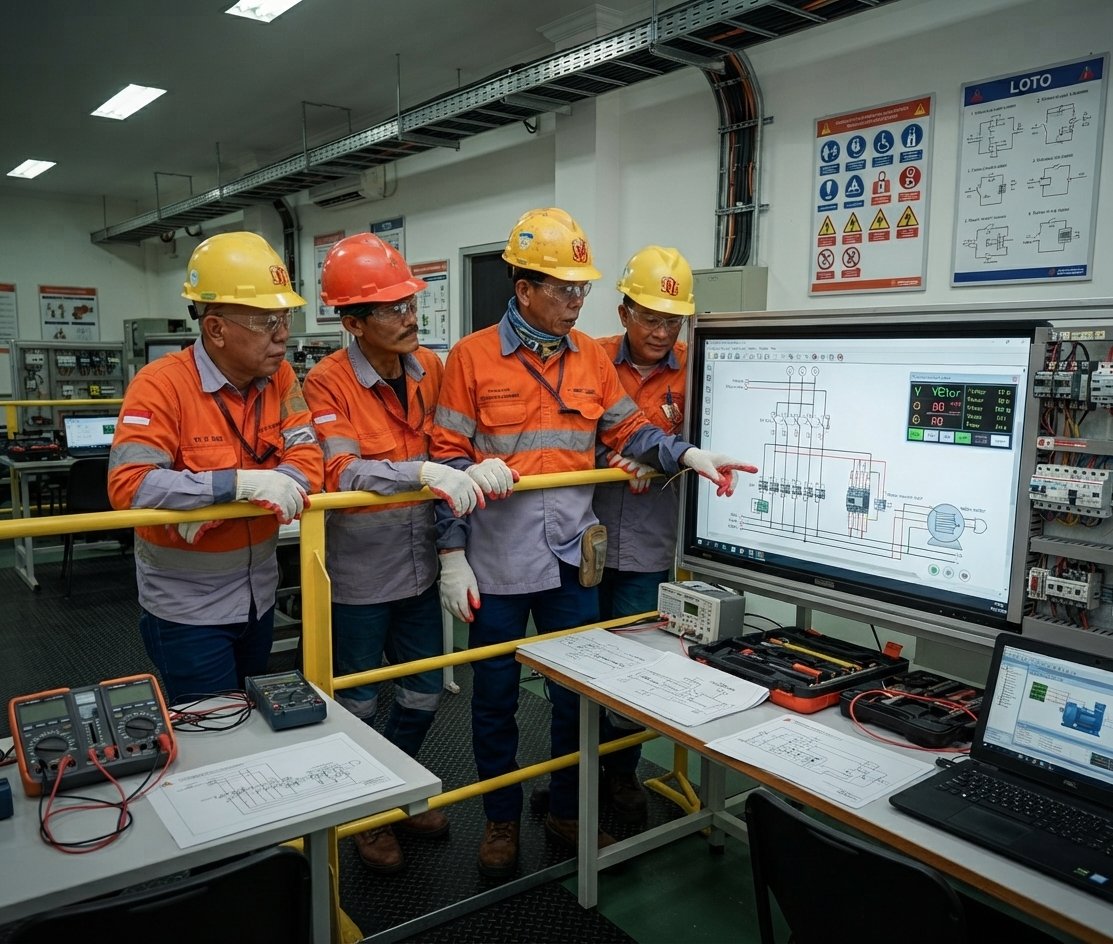
Technicians play an important role in keeping equipment operational. Their competency also affects maintenance, troubleshooting, safety, and productivity.
For this reason, companies should view technical training as an investment. Measuring ROI helps Management understand the value generated by training.
Why Is Technical Training ROI Important?
Companies need technicians with skills that match operational requirements. Skill gaps can make daily tasks slower and less effective.
Technical errors can also increase rework and maintenance costs. In certain situations, these errors can contribute to equipment downtime.
Technical training helps technicians improve their ability to perform critical tasks. The impact can appear through better operational efficiency.
However, companies should not only measure training attendance. Management should evaluate performance changes after training.
What Should Companies Measure?
Measuring ROI does not always require complex calculations. Companies can start with several operational indicators.
Relevant indicators include:
- Technician productivity
- Troubleshooting time
- Equipment downtime
- Rework frequency
- Maintenance quality
- First-time fix rate
- Safety performance
- Equipment availability
Compare performance before and after training.
If troubleshooting becomes faster, the training starts showing operational impact. If rework decreases, the company can also achieve cost savings.
Connect Training with Productivity
Productivity is an important indicator for technical training.
Technicians with stronger competencies can complete tasks more effectively. They can also identify technical problems faster.
Effective training can reduce troubleshooting time. Technicians can also perform maintenance according to established procedures.
The impact may not immediately appear in financial reports. However, these improvements can influence overall operational efficiency.
Training Cost Is Not the Only Consideration
Management often compares training fees with the available training budget. This approach does not fully determine training value.
Companies should also consider potential losses caused by skill gaps. Downtime, rework, and repeated troubleshooting can create significant costs.
Therefore, training cost should be considered alongside potential operational impact.
If training reduces recurring technical problems, the company can generate greater business value.
Use Before-and-After Performance Data
A simple way to measure ROI is establishing a baseline.
Record operational performance before the training program. After completion, use the same indicators for evaluation.
For example, companies can compare troubleshooting time before and after training.
They can also monitor changes in downtime and rework over a defined period.
This approach makes training outcomes easier for Management to understand.
Connect Training ROI with Business Goals
Technical training should have clear objectives from the beginning.
If the business goal is higher productivity, training should directly support that objective.
If the goal is reducing downtime, training should address relevant equipment and operational challenges.
HR and L&D should also collaborate with Engineering and Operations teams.
This collaboration helps identify the technical skills that technicians actually need.
From Skill Improvement to Business Value
Effective training should not stop at knowledge improvement.
Technicians need to apply their knowledge in daily operations.
Skill improvement can then lead to operational improvement.
Operational improvement can help companies increase productivity and reduce operational risk.
This is why Technical Training ROI should focus on business impact, not training attendance alone.
Technical Training as a Strategic Investment
Companies with strong technical workforces can achieve stronger operational capabilities.
Investment in technicians also helps companies adapt to changing technology and equipment.
Technical training can become part of a long-term workforce development strategy.
Well-designed programs can also strengthen internal technical capabilities.
Companies can therefore improve technician skills while strengthening operational resilience.
Technical Training ROI does not require a complicated calculation model.
Companies can start by measuring changes in productivity, quality, downtime, and operational efficiency.
Establish a baseline before training and compare it with post-training performance.
This approach helps Management understand the business value of technical training.
Technical training is more than an expense. It can become a strategic investment in technician capability and operational performance.
TSDC helps companies develop technical competencies through training aligned with industrial requirements.
Whatsapp : +62 811-8111-3032
Email : marketing@ptodg.com