
The Electrical Technician Skills Gap in Industry: How Significant Is the Impact on Company Productivity?
August 19, 2026
Cara Menghitung ROI Technical Training untuk Teknisi: Dari Biaya Training hingga Productivity Gain
August 29, 2026
Many companies still view technical training as an additional expense.
However, technician competency directly affects operational performance.
Technicians manage equipment, electrical systems, machinery, and critical company assets.
Small mistakes can cause downtime, repair costs, and operational disruption.
Companies therefore need to change how they view training investment.
Training should not only support HR competency requirements.
It can become a strategic tool for improving operational efficiency and business performance.
The Link Between Technician Skills and Productivity
Productivity depends on more than modern technology and equipment.
Technician capability also determines how efficiently companies use their assets.
Competent technicians can perform troubleshooting faster.
They can also identify potential problems before major failures occur.
These capabilities help companies reduce unnecessary downtime.
Maintenance activities also become more structured and efficient.
A well-designed Technician Training program can develop these capabilities systematically.
Companies can align training content with actual operational requirements.
Reducing Downtime and Maintenance Costs
Downtime remains one of the biggest operational risks for industrial companies.
Every hour of downtime can create production losses and additional costs.
Technical training helps technicians understand structured troubleshooting processes.
They can diagnose problems using appropriate data and procedures.
Training also strengthens preventive maintenance capabilities.
Technicians can identify abnormalities before they cause equipment failure.
As a result, companies can reduce emergency repairs and unplanned downtime.
Maintenance teams can also follow more consistent workflows.
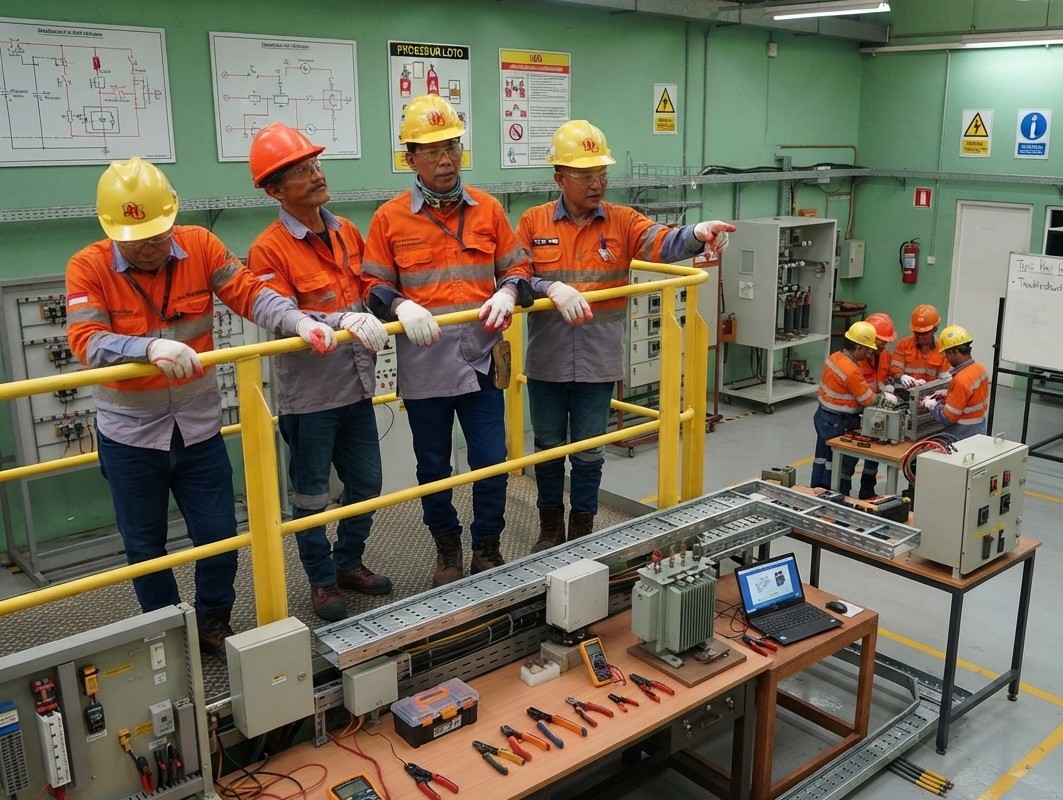
Improving Operational Safety
Productivity must always work together with operational safety.
Technicians with limited competency face higher risks during technical activities.
Training helps technicians understand safety procedures and technical standards.
They also learn how to identify hazards around equipment and electrical systems.
These capabilities support a stronger safety culture across operations.
Companies can reduce incident risks through better procedural understanding.
Measuring the ROI of Technical Training
Companies should measure training based on business impact.
Participant numbers and certificates alone cannot demonstrate training effectiveness.
Several indicators can measure training outcomes.
Examples include downtime, MTTR, maintenance costs, productivity, and equipment availability.
Companies can also compare performance before and after training.
This approach helps management understand the financial impact of training.
With proper measurement, training can move from cost center to strategic investment.
Training Should Start with Skill Gap Analysis
Not every technician requires the same training program.
Companies should conduct a skill gap analysis before selecting training content.
This analysis identifies technical competencies that require improvement.
Companies can then develop training based on specific technical roles.
This approach makes training investment more relevant and measurable.
Training content can also address actual equipment and operational challenges.
Technical training directly influences operational productivity and business performance.
Technician competency affects equipment reliability, maintenance efficiency, safety, and downtime.
Companies should therefore treat training as a long-term investment.
Measurable Technician Training can improve performance while reducing operational risks.
TSDC helps companies develop technician competency through industry-focused technical training programs.
Programs can align with skill gaps, technical roles, equipment, and operational requirements.
Whatsapp : +62 811-8111-3032
Email : marketing@ptodg.com