Still Think Training Is a Cost? Here’s How Technician Training Boosts Profit
April 1, 2026
High Salary Is Not Enough: Why Employees Stay Loyal to Companies That Invest in Their Skills
April 2, 2026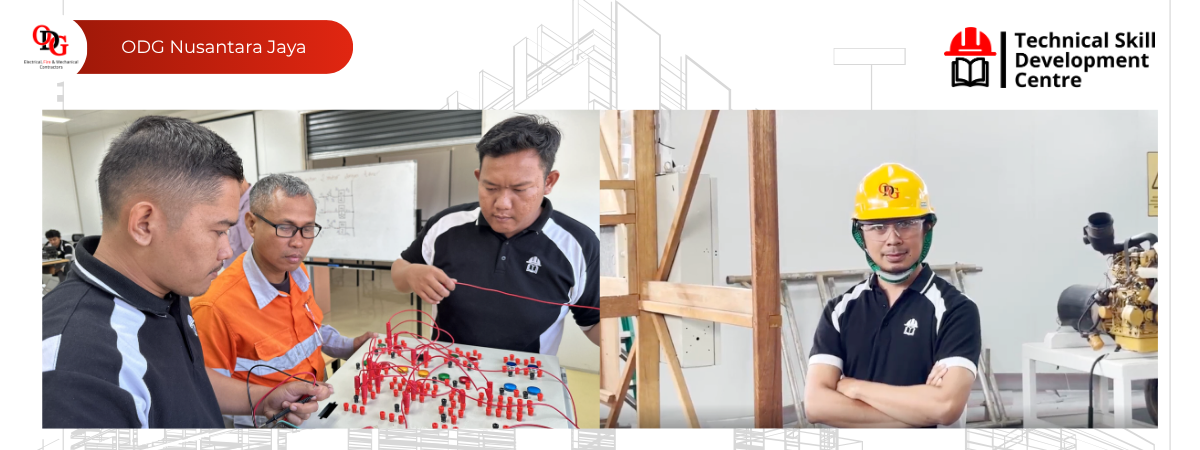
As a company operating in Indonesia’s electrical, construction, energy, or industrial sector, you are likely familiar with a recurring challenge: finding electricians who not only hold a certificate, but who can actually perform — safely, consistently, and to a professional standard — on the job.
The gap between certified and genuinely competent is wide in Indonesia’s electrical workforce. And closing that gap is, in large part, a training problem. More specifically, it is a problem with the type of training most companies rely on.
Electrical apprenticeship offers a different answer — one that is worth understanding if you are responsible for the development and performance of your company’s technical workforce.
What Is an Electrical Apprenticeship?
An electrical apprenticeship is a structured, long-term training programme that combines formal classroom instruction with supervised, practical experience in a real workplace. Unlike a short course or a one-time certification exam, an apprenticeship unfolds over an extended period — typically two to four years — during which the participant learns progressively more advanced skills and applies them under the guidance of qualified professionals.
The core idea is simple: you cannot learn to be a skilled electrician by studying alone. You need to work alongside experienced people, handle real tools and real systems, make decisions in real conditions, and receive feedback on what you are doing well and where you need to improve. An electrical apprenticeship provides exactly that structure.
At its best, an apprenticeship does three things simultaneously:
- It builds technical knowledge through structured instruction
- It develops practical skill through supervised on-the-job application
- It instils professional habits — around safety, quality, and accountability — that become second nature over time
For companies, this matters because the learning happens within your operational environment. The skills being developed are applied directly to your projects, your systems, and your standards — not in a generic training setting that may have little resemblance to your actual worksite.
How Is It Different from a Short Electrical Training Course?
This is the question most HR and training managers ask first — and it is the right one
A short electrical training course — whether it runs for a few days or a few weeks — is designed to deliver a concentrated block of knowledge or skill in a specific area. These courses have their place. They are useful for introducing a new concept, refreshing existing knowledge, or meeting a compliance requirement. But they have significant limitations when it comes to building deep, reliable competency.
The primary issue is retention and transfer. Research in adult learning consistently shows that knowledge acquired in a classroom setting is quickly forgotten unless it is applied in practice — and applied repeatedly, in varied conditions, over time. A technician who attends a three-day course on electrical panel installation may leave with a good theoretical understanding, but without ongoing practice and supervision, much of that knowledge will fade before they have a chance to use it meaningfully.
An electrical apprenticeship, by contrast, is designed around the cycle of learn, apply, reflect, and improve — repeated continuously over years. Each time a participant returns to the classroom, they bring with them real questions from real work situations. Each time they return to the worksite, they carry new knowledge to put into practice. The two environments reinforce each other in a way that short courses simply cannot replicate.
Why This Matters for Your Company Specifically
The case for electrical apprenticeship is not just about individual skill development. It is about what better-trained employees deliver to your organisation.
Fewer errors and less rework. Technicians who have been trained through a structured apprenticeship make fewer installation mistakes. When errors do occur, they are identified and corrected faster. Over a year of operations, the reduction in rework alone can represent a meaningful cost saving — in materials, labour hours, and project delays.
Safer worksites and reduced incident exposure. Electrical incidents — burns, shocks, fires, equipment failures — are disproportionately associated with undertrained workers. The legal, financial, and reputational consequences of a serious electrical incident can be severe. Investing in structured electrical training is, among other things, a risk management decision. Electricians who understand why safety procedures exist — not just what they are — apply them more consistently and influence site safety culture more broadly.
Higher productivity from your technical workforce. A well-trained electrician works faster, requires less supervision, and is better equipped to problem-solve when site conditions do not match the textbook scenario. Across a team of technicians, that difference in baseline capability has a compounding effect on overall operational productivity.
Stronger employee retention. Companies that invest meaningfully in the long-term development of their staff see measurably better retention. When an employee knows that their employer is committed to building their career — not just filling a skills gap in the short term — they are significantly more likely to stay. Given the cost of recruiting and onboarding skilled technical workers, the retention dividend from a structured training investment is real and substantial.
TSDC Approach to Electrical Training
TSDC (Technical Skill Development Centre) offers a unique learning approach compared to traditional electrical courses. Our program is designed as a 3-year electrical apprenticeship, where participants develop specific skill sets every 6 months. Each cycle consists of 1 month of intensive classroom learning and 5 months of on-the-job training, allowing participants to work directly in real industrial environments. This ensures not only theoretical understanding but also hands-on experience aligned with industry needs. The TSDC Electrotechnology Apprenticeship Program uses an industry-based curriculum developed in collaboration with Holmesglen Victoria TAFE and tailored to the needs of Indonesia’s workforce. Participants attend classrooms and practical workshops at TSDC, where theoretical knowledge is applied through hands-on training and industry-standard installation practices.
The acquired competencies are subsequently applied in the participants’ respective workplaces, with implementation and progress monitored by their supervisors.
This model is highly effective for companies looking to upskill their workforce through practical electrical training programs.
Let’s build a safer and more competent workforce together.